

The Bridge of Trust
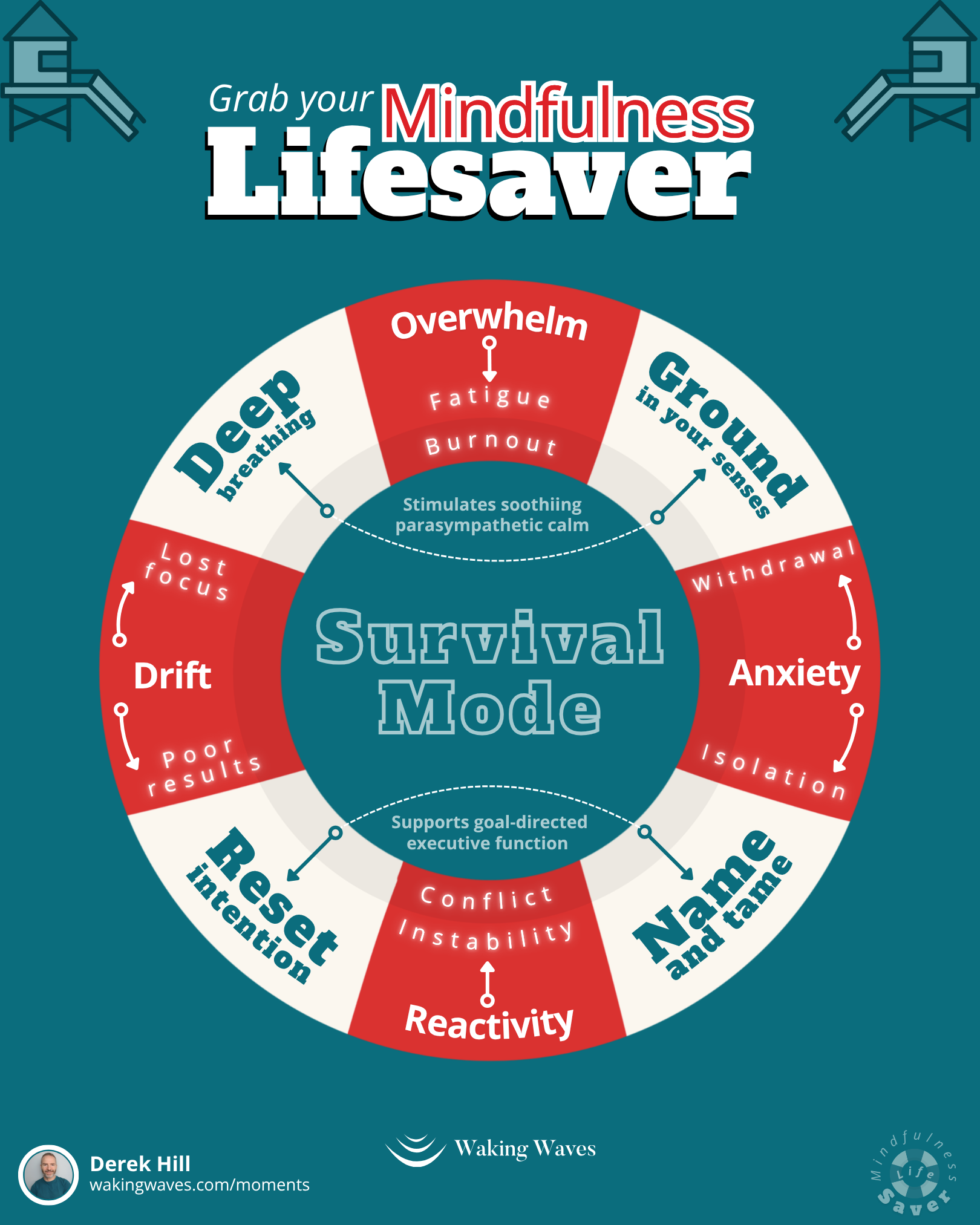
Grab your Mindfulness Lifesaver 🛟
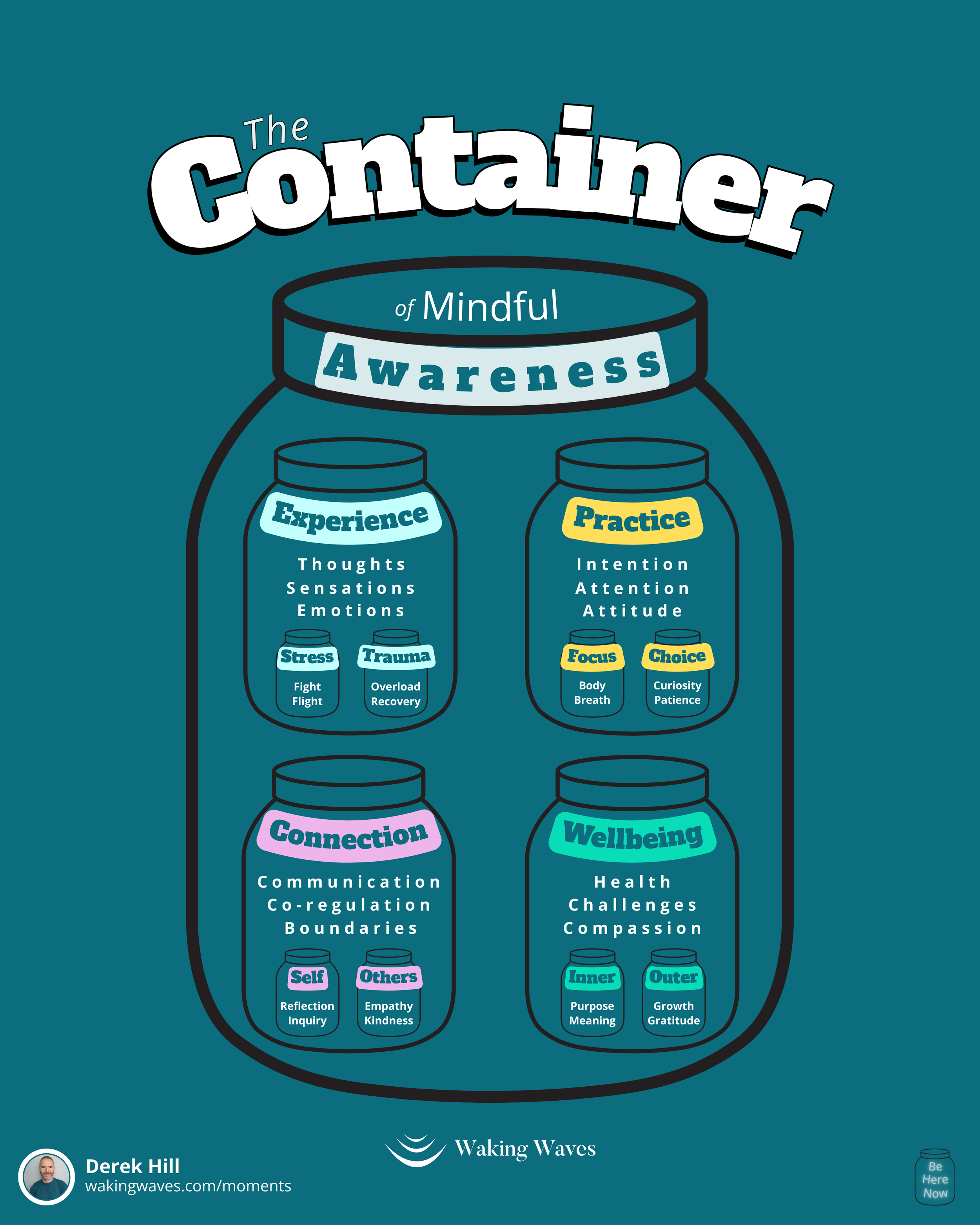
Open the Container of Mindful Awareness 🫙
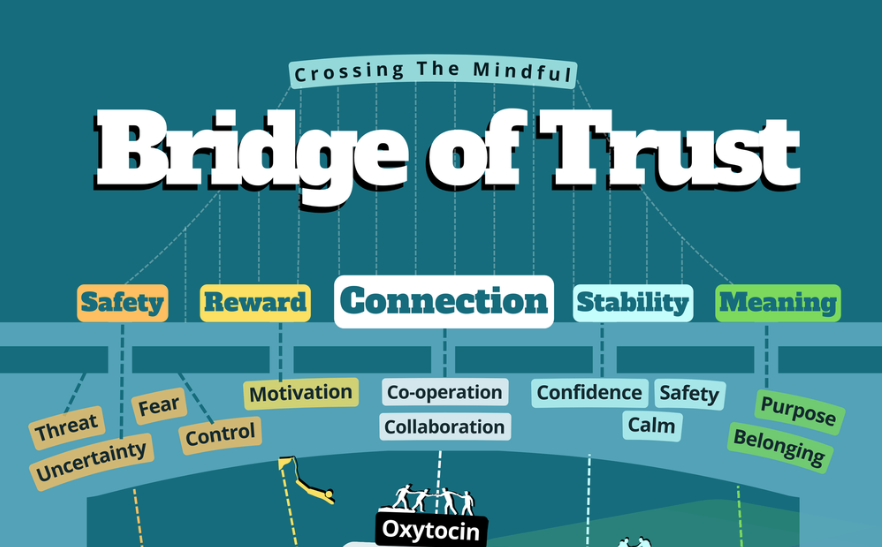
Words don’t build trust.
A regulated presence does ⚖️
In leadership, there’s often pressure to promise outcomes and craft compelling narratives that inspire teams to deliver. But when people feel unsafe, even the best intentions feel unreliable.
Stress, uncertainty and turbulent conditions push teams into self-protection and defence, not connection or collaboration.
In low trust environments:
📈 Cortisol, threat and vigilance spike
📉 Focus, creativity and empathy dip
Leaders become rudderless. Teams become directionless.
The antidote?
To move from ‘Safety’ to ‘Meaning’ by crossing the mindful…
- Bridge of Trust -
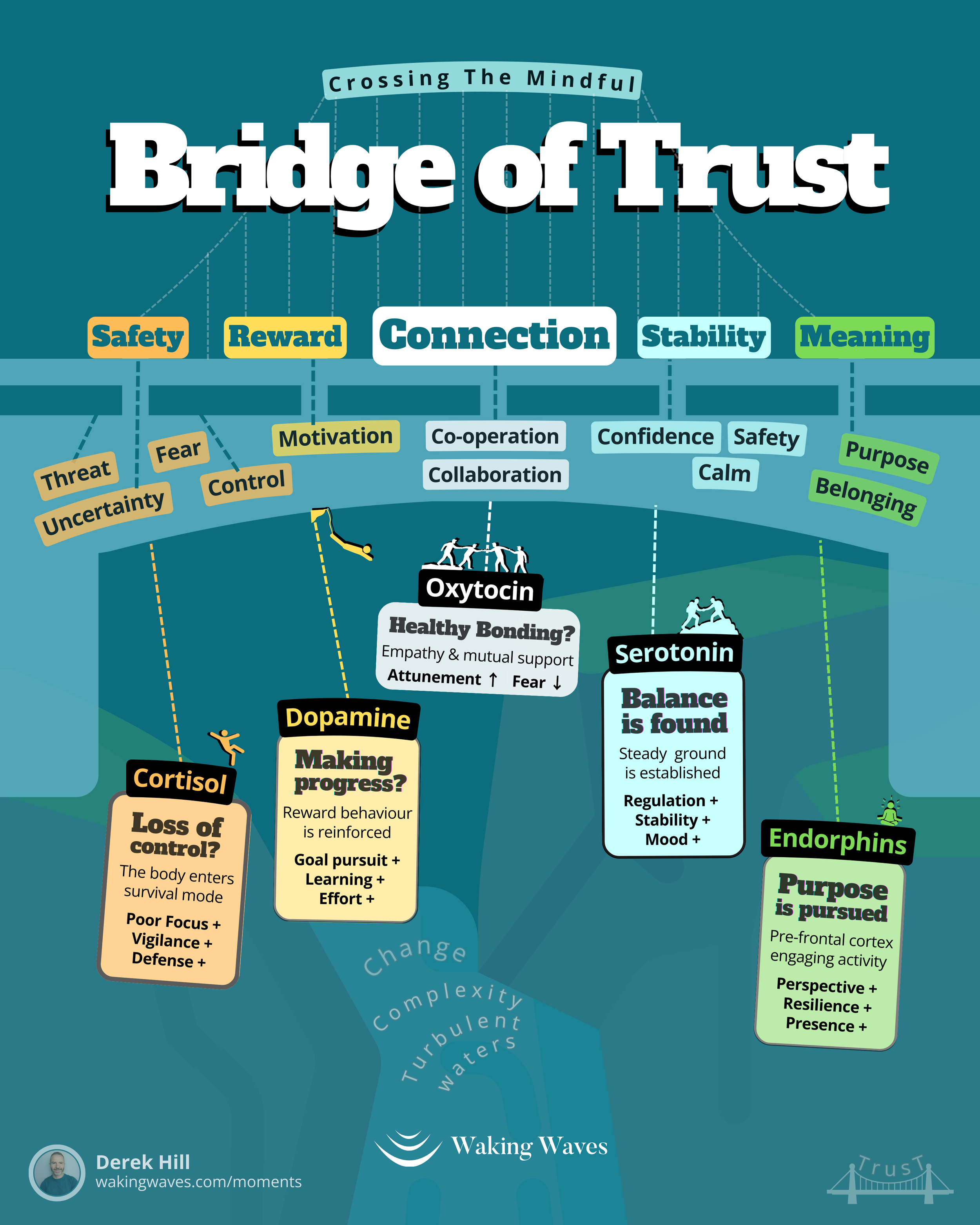
(If re-sharing, please tag / reference Waking Waves keeping visual intact)
The Bridge of Trust
When mindful practice meets our neurobiology:
Safety → leads to Motivation
Motivation → leads to Connection
Connection → leads to Stability and Meaning
How can I practice this?
🟠 SAFETY (Cortisol)
When stress hormones narrow attention and heighten defence:
Practice: Breathe deeply to regulate the nervous system
🟡 REWARD (Dopamine)
When learning and goal pursuit is driven by dopamine alone:
Practice: Reflect with gratitude on progress, not just outcomes
⚪️ CONNECTION (Oxytocin)
When trust and healthy bonding rely on social attunement and empathy:
Practice: Listen deeply without trying to fix or solve
🔵 STABILITY (Serotonin)
When emotional balance supports confidence, steadiness and calm:
Practice: Take and encourage self-compassionate breaks
🟢 MEANING (Endorphins)
When belonging and purpose exist in consciously engaged teams:
Practice: Set values-aligned intentions to guide meaningful work
Which step or practice might help you when crossing
The Bridge of Trust?
Grab your Mindfulness Lifesaver
Derek Hill
Waking Waves
📧 hello@wakingwaves.com

